Les muntanyes representen un recurs natural fràgil, però també un espai de llibertat on conviuen la fauna salvatge, els ramaders, els ramats, els silvicultors i els amants de l’aire lliure.
Aquí teniu algunes recomanacions a seguir per protegir la fauna:
- Es prohibeixen els focs (excepte en fogueres designades i autoritzades pel Prefecte). El bosc és fràgil i vulnerable a les flames.
- Cal collir plantes i baies amb moderació. Algunes són rares, d’altres són aliment valuós per a la fauna i d’altres poden ser verinoses.
- Cal portar els gossos lligats (estan prohibits a les reserves nacionals) per protegir la fauna i la tranquil·litat del bestiar i de la fauna salvatge.
- S’han d’utilitzar senders marcats per evitar trepitjar certes plantes, crear nous senders i molestar les espècies sensibles.
- No es recomana nedar en llacs i rius de muntanya, ja que provoca contaminació (protector solar, bacteris, sals minerals) que perjudica la vida aquàtica.
- Les deixalles no tenen cabuda a la natura; porteu una bossa per emportar-vos-la a casa.
- La discreció és clau per gaudir d’observacions fantàstiques de fauna.
La serralada inclou tres reserves naturals nacionals, una reserva natural regional, una reserva biològica gestionada i dues reserves de caça i fauna. Més enllà d’aquestes bones pràctiques, recordeu consultar la normativa vigent per a cada reserva : https://canigo-grandsite.com/patrimoine/patrimoine-naturel/especes-a-enjeux/
A les Reserves Naturals Nacionals
Les Reserves Naturals Nacionals són espais protegits, classificats per decret ministerial per preservar la natura. Agents comissionats i jurats controlen aquestes zones i estan autoritzats a emetre multes per infraccions. A les reserves del massís del Canigó, s’aplica la normativa següent :

A les zones pastorals
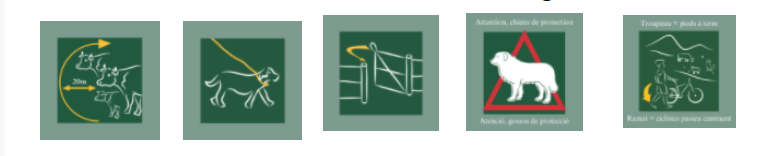
A les zones de pastura de ramats, els grups pastorals han instal·lat senyalització:
- Mantingueu una distància de seguretat dels ramats. Les vaques són molt protectores amb els seus vedells i pesen entre 600 i 800 kg.
- Els gossos han d’anar lligats.
- Les portes s’han de tancar després de cada pas per evitar que els ramats s’escapin.
Quan us acosteu a un gos de protecció del ramat (anomenat « Patou », utilitzat per vigilar i defensar els ramats d’ovelles contra els depredadors): - Atureu-vos mentre us identifica, mantingueu la calma i la passivitat,
- Deixeu els bastons, no amenaceu ni acaricieu el gos i eviteu moviments bruscos,
- Baixeu de la bicicleta i camineu al costat del gos.
Risc d’incendi als Pirineus Orientals
El foc és un risc important per als boscos d’Occitània. En espais naturals, només es permet l’ús del foc en zones designades, aprovades pel Prefecte i equipades amb la senyalització adequada. Durant el període de perill d’incendi (de l’1 de juliol al 15 de setembre), i depenent de les condicions meteorològiques, l’accés a certes zones forestals pot estar restringit. Consulteu el mapa, actualitzat diàriament (entre les 17:00 i les 18:00 del dia següent): https://www.risque-prevention-incendie.fr/pyreneesorientales/
Let’s share and protect the mountains !
The mountains are a rich yet fragile natural environment, as well as a space of freedom where wildlife, livestock farmers, herds, foresters, and outdoor recreation users coexist.
A few guidelines to help protect wildlife :
- Fires are prohibited (except in areas authorised by the Prefect). The forest is fragile and highly vulenarable to flames.
- Plants and berries should be picked sparingly. Some species are rare, others are vital food sources for wildlife, and some may be toxic.
- Dogs must be kept on a leash (and are not allowed in national nature reserves), to protect wildlife and avoid disturbing livestock.
- Marked trails should be followed to prevent trampling of sensitive plants, the creation of new paths, and disturbance to vulnerable species.
- Swimming in high-altitude lakes and rivers is not recommended, as it causes pollution (sunscreen, bacteria, minerals) that harms aquatic life.
- Litter has no place in nature, please take your waste with you.
- Quiet and discretion are encouraged in exchange for better chances of observing wildlife.
The massif includes three national nature reserves, one regional nature reserve, one managed biological reserve, and two hunting and wildlife reserves. Beyond these good practices, please make sure to consult the regulations in force for each reserve : https://canigograndsite.com/patrimoine/patrimoinenaturel/especesaenjeux/
In National nature reserves
National nature reserves are protected areas designated by ministerial decree to safeguard natural environments. Sworn and authorised officers are responsible for monitoring these areas and are empowered to issue fines in the event of infringements.
In the reserves of the Canigó massif, the following regulations apply:
In pastoral areas
In areas used for grazing livestock, pastoral groups have installed specific signage:
- Herds should be given a wide berth. Cows are very protective of their calves and can weigh between 600 and 800 kg.
- Dogs must be kept on a leash.
- Gates must be closed after each passage to prevent livestock from escaping.
When encountering a livestock guardian dog (“patou”), used to protect sheep from predators: top and allow the dog to identify you, remain calm and still. - Put away walking sticks, do not threaten or attempt to pet the dog, and avoid sudden movements.
- Dismount your bicycle and walk alongside it.
Wildfire risk in the Pyrénées-Orientales
Wildfires are a major risk for the forests of Occitanie. In natural areas, fire is only permitted in authorised fire pits approved by the Prefect, specifically designed and clearly signposted.
During the fire risk period (from 1 July to 15 September), and depending on weather conditions, access to certain forested areas may be regulated. Please consult the map, updated daily between 5 pm and 6 pm for the following day : https://www.risque-prevention-incendie.fr/pyrenees-orientales/